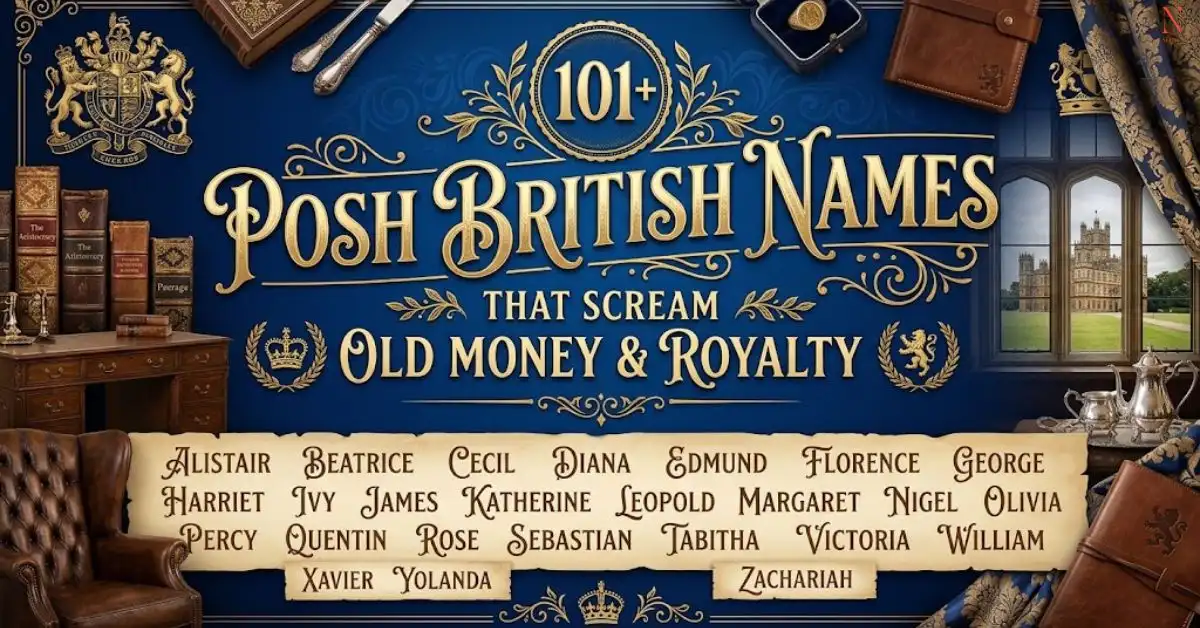
101+ Posh British Names That Scream Old Money & Royalty
Some names walk into a room and the whole room straightens its posture. Arabella does it. So does Montague.
Whether you’re after Posh British Names for a new baby, a character in your novel, or just for the pleasure of reading them, this guide collects more than 101 posh British names, along with their roots, nicknames and the social signals they send.
You’ll find posh girl names, posh boy names, royal British names, and surname-style choices, all sorted by the kind of heritage they carry.
👉 Read More: Female Last Names
What Are Posh British Names?
Posh British names are first names tied to the British peerage, landed gentry, noble families and royal naming traditions.
They usually fall into three camps: regnal names borrowed from kings and queens, Norman French names that arrived after the Norman Conquest, and classical or literary picks that reflect a certain kind of education.
The term “posh” is slippery. It can mean aristocratic baby names, upper-crust names, or simply names that sound expensive. What they share is a feeling of lineage.
These are heritage names, repeated in titled families and recorded in places like Debrett’s Peerage, and that repetition is exactly what makes them feel like old money.
👉 Read More: Gamer Tags for Girls
Why Posh British Names Still Carry Heritage and Status
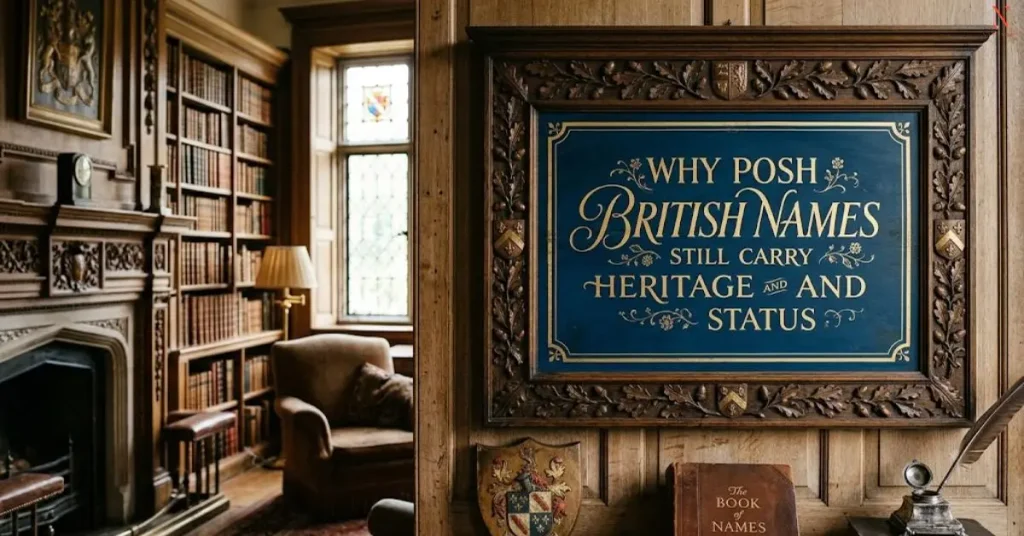
Fashion changes quickly, but elite naming circles move slowly. Families with historic estates tend to hand names down rather than invent new ones, so the same dynastic names keep surfacing across generations.
School registers at Eton and Harrow tell the same story, with Hugo, Rupert and Sebastian turning up again and again.
There is also a modern echo. The Telegraph birth announcements are often read as a snapshot of upper-class naming, and Tatler baby names lists get passed around with great enthusiasm every year.
Neither is scientific, but both show how heritage and status still shape what some parents choose.
👉 Read More: Girl Names That Mean Death
Posh Girl Names
- Arabella: Latinised Scottish, estate-era favourite
- Araminta: Victorian literary
- Allegra: Italian, “cheerful”
- Augusta: Latin imperial
- Camilla: Latin, royal link
- Cecily: medieval English
- Cordelia: Shakespearean
- Flora: Latin botanical, Edwardian staple
- Henrietta: French noble form (Hattie, Etta)
- Leonora: Italian, operatic
- Octavia: Roman, “eighth”
- Olympia: Greek, grand and classical
- Ophelia: Shakespearean
- Ottilie: German aristocratic
- Primrose: English floral
- Rosamund: Norman, medieval
- Tatiana: Russian imperial
- Theodora: Greek, Byzantine
- Beatrice: Latin, “she who brings happiness”
- Isabella: Spanish, queenly
- Clementine: Latin, “merciful”
- Cressida: Greek, “gold”
- Florence: Latin, “flourishing”
- Philippa: Greek, “lover of horses” (Pippa)
- Tamsin: Cornish, “twin”
- Beatrix: Latin variant of Beatrice
- Jemima: Hebrew biblical
- Imogen: Shakespearean
- Daphne: Greek mythology
- Xanthe: Greek, “golden”
- Yseult: Arthurian legend
- Zara: royal association
- Antonia: Latin patrician
- Clarissa: Latin, Georgian refinement
- Cosima: Greek, European aristocratic
- Lettice: medieval English, Tudor nobility
- Lucinda: Latin, “light”
- Perdita: Shakespearean, rare
- Rosalind: Germanic, Shakespearean
- Tabitha: Aramaic biblical
👉 Read More: Bad Names for Boys
Posh Boy Names
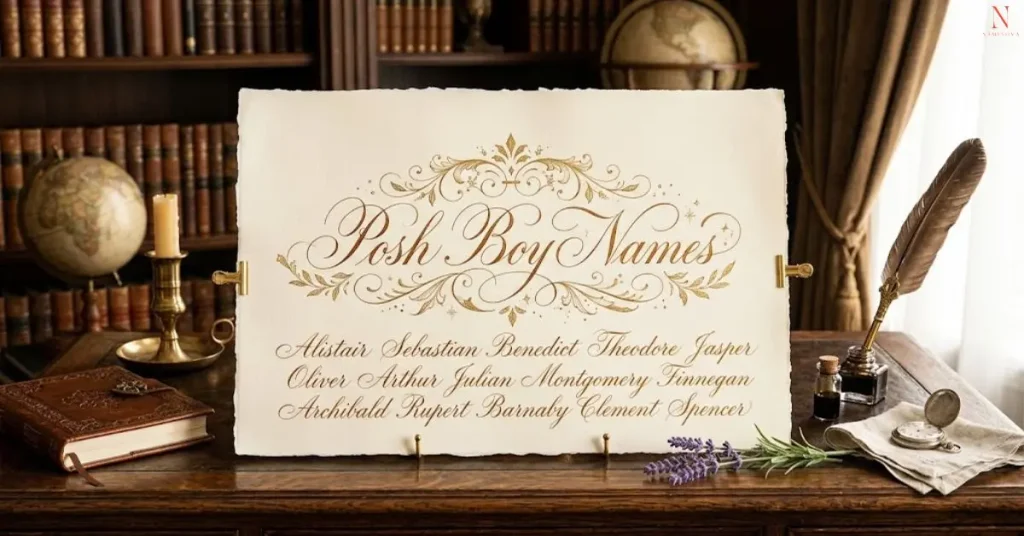
- Algernon: Norman French
- Archibald: Germanic, Scottish aristocracy
- Augustus: Latin imperial
- Barnaby: Aramaic, “son of consolation”
- Benedict: Latin, “blessed”
- Caspian: literary revival
- Cosmo: Greek, “order”
- Felix: Latin, “fortunate”
- Hugo: Germanic, “mind”
- Humphrey: Germanic, Norman import
- Leopold: Germanic, European royal
- Montague: Norman surname
- Orlando: Italian literary
- Otto: Germanic, continental royal
- Rupert: Germanic, “bright fame”
- Tarquin: Roman, classical revival
- Tobias: Hebrew, “God is good” (Toby)
- Tristan: Celtic, Arthurian
- Wilfred: Old English
- Arthur: Celtic, legendary king
- Sebastian: Greek/Latin, “venerable”
- Hector: Greek mythology
- Crispin: Latin, “curly-haired”
- Atticus: Greek/Latin, “from Attica”
- Ptolemy: Greek, say TOL-eh-mee
- Inigo: Spanish/Basque
- Piers: Greek, “rock”
- Alastair: Scottish form of Alexander
- Jasper: Persian, “bringer of treasure”
- Giles: medieval saint name
- Quentin: Latin, “fifth”
- Vere: Norman, noble house
- Digby: English surname turned first name
- Fergus: Gaelic, Scottish clan name
- Ludovic: Latinised Louis
- Marmaduke: long-standing noble usage
- Lysander: Greek, “liberator”
- Horatio: Latin, Admiral Nelson link
- Ivo: Germanic, Norman knightly
- Rufus: Latin, “red-haired”
👉 Read More: Unique Cat Names for Girls
Posh Surname-Style Names

- Spencer
- Cavendish
- Windsor
- Grosvenor
- Beaufort
- Pembroke
- Hastings
- Fairfax
- Percy
- Neville
- Talbot
- Mortimer
- Beauchamp
- Devereux
- Mowbray
- Courtenay
- Montgomery
- FitzRoy
- Fitzwilliam
- Beaumont
- Salisbury
- Buckingham
- Cromwell
- Kemp
- Hartley
👉 Read More: Puerto Rican Girl Names
Posh British Names, Popularity and the UK Charts

Here’s something interesting: the most posh British names rarely match the official name popularity lists. When researchers compare Telegraph parents with the national Top 100, the two lists look very different.
Ottilie, Flora and Beatrice appear far more often in upper-class announcements than their England and Wales ranking would suggest, while ONS baby names data shows Noah, Muhammad and Oliver dominating nationally.
That gap is the point. Posh names value rarity, eccentric names and long memory over popularity. Tracking name popularity across UK charts can help you spot climbers, but a truly posh choice often sits well outside them.
How to Choose Among Posh British Names
Picking one doesn’t need to be stressful. A few nickname tips and common-sense checks help:
- Say the nickname aloud. Bartholomew is magnificent on paper, but you’ll live with Barty daily.
- Think about surname balance. Long, ornate names like Llewellyn or Ptolemy pair best with short surnames.
- Check spelling and pronunciation. Names like Ptolemy, Xanthe and Yseult will need explaining at school and the doctor’s office.
- Look for a namesake. British names with notable namesakes, such as Winston, Audrey or Charles, add a story to the choice.
- Choose upper-crust charm you’ll still love in ten years. A timeless classic always outlasts a trend.
Common Mistakes When Picking Posh British Names
- Choosing a name only because it sounds expensive. If you don’t like saying it, the prestige won’t help.
- Ignoring the nickname. The short form is what people will actually use.
- Stacking too many grand names. Marmaduke Montgomery Fitzwilliam is a lot for a form on a school desk.
- Mixing styles. A very ornate first name can clash with a very modern surname.
- Forgetting initials. Always check what the initials spell.
Quick Tips for a Truly Posh Name Combination
- Use a classic first name with a surname-style middle name
- Keep the sound balanced: long first name with short surname, or the reverse
- Add a family name as a middle name to honour lineage
- Use a saint’s name or royal name for a traditional feel
- Say the full name aloud three times before deciding
My Final Thoughts:
Whether you lean toward the theatrical (Araminta, Marmaduke), the quietly regal (Henry, Charlotte), or the surname-style (Beaufort, Cavendish), posh British names offer something rare: a connection to a long story.
Pick the one that sounds like it belongs to your family, and it will feel old money from the very first day.
FAQs
What makes a name sound upper class in Britain?
Regnal continuity, Norman French structure, estate links and multi-syllable Latin forms. Documented use in peerage records and royal circles gives that refined elegance.
What is the most posh British boy name?
Arthur and Charles are strong contenders thanks to royal history, while Montague and Montgomery signal Norman aristocracy.
What is the most posh British girl name?
Beatrice, Arabella and Theodora are the usual frontrunners, each for a different reason: royal links, estate-era grandeur and classical education.
Are royal names always posh?
Mostly, but not always. Context, surname and family history decide how strongly a name signals aristocratic standing.
What are some old money names for girls and boys?
For girls, Elizabeth, Catherine, Charlotte and Victoria. For boys, Edward, Henry, George and William. They repeat in titled families across generations.
Are there aristocratic names of all time that never fade?
Yes: Charles, Henry, Beatrice and Catherine appear throughout British history and show no sign of leaving.